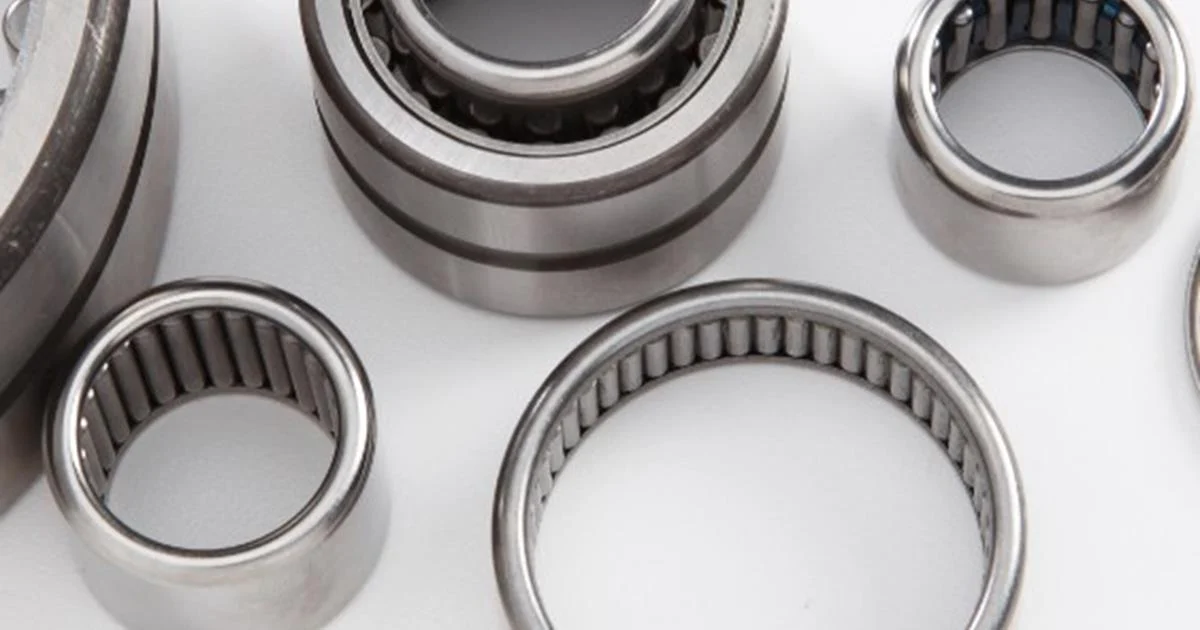
Rodamientos de agujas tienen la capacidad de disminuir la fricción y, por lo tanto, permiten operaciones fáciles en numerosos sistemas. No obstante, es posible que sea necesario retirar dichos cojinetes para fines de mantenimiento, reemplazo o reparación. Aprender los métodos para retirar los rodamientos de agujas es fundamental para evitar daños al rodamiento y a las piezas cercanas durante el proceso. En este artículo se analizarán varios métodos para extraer rodamientos de agujas. Existen puntos fuertes y enfoques óptimos asociados con cada método, que se explicarán en esta guía.
Comprensión de los rodamientos de agujas
Now, let me explain what needle roller bearings are before proceeding to the various removal techniques of the same. These bearings consist of a series of long, thin rollers that are significantly longer than their diameter. It is possible to achieve high load carrying capacity with needle roller bearings when the bearings are designed in this manner and at the same time occupy minimal space. This radial structure is especially advantageous in applications with restricted mounting sizes.
The design and material of the needle roller bearings make it have high load carrying capacity. They can be
diseñado sin un aro interior utilizando el propio eje como elemento rodante, lo que bien puede reducir tanto el tamaño como la masa. Esto hace que los métodos adecuados de instalación y desinstalación sean un factor importante cuando se trata de su funcionalidad.
Métodos para quitar los rodamientos de agujas
1. Método de golpe
El método de golpeo es uno de los más sencillos y utilizados con más frecuencia para desmontar rodamientos de agujas. Incluye el uso de fuerza durante la extracción del rodamiento mediante golpecitos sobre el mismo. A continuación se explica cómo hacerlo de forma eficaz:
Pasos para el método de golpear
Gather Your Tools: Now you will also need a soft metal rod – preferably copper or aluminum, hammer and spacers.
Prepare the Work Area: It is also important to have a pristine environment throughout the process and therefore have a stable work surface.
Position the Bearing: Should the bearing be positioned at the end of the shaft, use a rod, the outer diameter of which is less than the inner diameter of the bearing. This rod will be mounted opposite to the shaft end.
Rodamientos NSAR needle roller bearings have unique roller and raceway contours that reduce stress concentrations that cause early failure of the bearings.
Add Spacers: Put a spacer underneath the bearing. This will give you firm foundation and should help protect the area around you from being damaged by any force that you apply.
Apply Tapping Force: Gently hit the soft metal rod with the hammer. But, the force should be concentrated on the inner ring of the bearing. Don’t hit the rolling elements and the cage because they will be harmed.
Monitorear la alineación: al golpear, también es importante que el rodamiento se mueva hacia arriba y hacia abajo en línea recta. Si se pierde la alineación, se debe ajustar la posición del espaciador.
Precauciones y consideraciones
Cuando se utiliza el proceso de golpear, es bastante efectivo; sin embargo, el proceso puede causar daño si se realiza con mucha fuerza. Una de estas consideraciones tiene como objetivo garantizar que la fuerza aplicada esté bien controlada y bien dirigida. Golpear el área del rodamiento debería hacer que el rodamiento se mueva; por lo tanto, si no se mueve, verifique la alineación del canal y fuerce la aplicación una vez más.
Contáctenos para información sobre rodamientos de rodillos.
2. Método de descanso en caliente
El método de rotura en caliente mencionado es más eficaz en el caso de rodamientos de agujas estrechos. Esta técnica utiliza la expansión (térmica para ser precisos) en el proceso de eliminación.
Pasos del método Hot Break
Prepare the Oil: Warm oil to around 75-80 C or 165- 172 F, simply because the maximum temperature you have to reach will be 100 C or 212 F. This oil will be used to spread the bearing ring.
Apply the Oil: Gradually pour the hot oil on the bearing which is to be removed. While using this type of furnace, it is also important to heat the bearing evenly to avoid chances of center cracking.
Wait for Expansion: Let the bearing stand for some time, preferably a few minutes. It is anticipated that the heat will alter the expansion of the bearing ring and consequently reduce the tightness of its interaction with the shaft.
Use a Puller: Once the bearing is hot enough for you to bear the smell, then utilize a bearing puller to remove it from the shaft. For this reason, the puller should be placed properly and aligned well so that it does not pull off center.
Pull Gradually: Start to withdraw the bearing gradually. Make arrangement that the puller is centrally positioned and that no pressure is applied at one side.
Advantages and Limitations
The hot break method is suitable in the removal process of tightly fitted bearings without applying extra force. Nevertheless, it involves risk when working with hot oil, which may lead to burning or spilling of the oil. Avoid direct contact with hot substances or wear protective clothing each time you are dealing with heat.
3. Método de empuje
La técnica de utilizar una prensa para desmontar rodamientos de agujas también es un método de operación estable y eficaz, que reduce significativamente la probabilidad de dañar los rodamientos y el equipo adyacente.
Pasos para el método Push
Set Up the Press: Place the bearing in either a hydraulic or mechanical press. Make sure that the crucial point of the work is focused on the shaft.
Align the Components: Make sure that all components are set into the right position before applying force.
Press the Bearing Out: Ease pressure using the press and apply it in progress. Keep an eye on the bearing as it starts to spin or turn.
Avoid Biasing: Make sure that the force is spread out and that the press does not become out of whack which harms the device.
Complete the Removal: When the bearing is completely pressed out one must check whether the bearing is spoiled or not.
Beneficios del método Push
El método de empuje tiene la ventaja de que proporciona la estabilidad necesaria para eliminar el riesgo de dañar ciertos componentes al realizar algunas extracciones. Esto es más adecuado para casos que exigen precisión y puede adaptarse a una gran cantidad de tamaños de rodamientos.
 4. Método de extracción
De hecho, el método de extracción se realiza con la ayuda de un extractor que se utiliza para rodamientos de agujas. Este es un método que permite una extracción controlada y se puede utilizar tanto para la extracción del anillo interior como del exterior.
Pasos para el método de extracción
Select the Correct Puller: The size of the puller should match that of the needle roller bearing that you’re pulling out.
Position the Puller: Fasten the puller onto the bearing such that the element is accurately positioned.
Adjust the Legs: In performing outer ring removal, the legs of the puller should be positioned in the outwards direction. During inner ring removal the legs should be inclined inwards so that they touch the end face of the inner ring.
Rotate the Handle: Slowly turn the handle of the puller clockwise and anti-clockwise. Doing this will gradually cause the bearing to be pulled out from the housing.
Monitor Progress: As the bearing is pulled look at the direction it comes out to ensure it is aligned properly.
Quality is therefore guaranteed at NSAR to enable their bearings to endure the harshest operating environment for use in automotive transmissions, air conditioning compressors, and several industrial applications.