¿Qué es un rodamiento rígido de bolas?
Compared to ordinary bearings,
deep groove ball bearings feature raceways that nearly match the size of the balls that are used in them. Compared to shallow groove bearings, the balls with deep grooves are more stable and have a larger load capacity. While still having considerable axial load capacity, they still have minimal friction and the deep grooves reduce noise and vibration.
You have likely seen a deep groove ball bearing if you have ever seen any kind of ball bearing. These are the most often used bearings because of their low friction, availability, and adaptability. They have several benefits over other ball-bearing types and are perfect for high speeds.
These bearings are ideal for house or industrial use and come in a variety of forms, dimensions, and load-carrying abilities. Deep groove ball bearings are comfortable to replace conventional bearings with, and they may prolong the life and enhance the performance of your device.
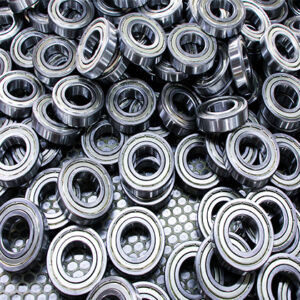
Parámetros esenciales de los rodamientos rígidos de bolas
Los tipos más populares de rodamientos son
rodamientos rígidos de bolas. An outer ring, an inner ring, a set of steel balls, and a set of cages make up a basic deep groove ball bearing. Deep groove ball bearings come in two varieties: single-row and double-row. There are two varieties of deep groove ball structures: sealed and open. and seals that are oil-proof. The steel plate imprinted on the cover material of the sealed and dust-proof deep groove ball serves merely to keep dust out of the bearing raceway.
As a contact oil seal, the oil-proof deep groove ball bearing can successfully stop the grease in the bearing from spilling out. Two codes are assigned to deep groove ball bearings: 6 for a single row and 4 for a double row. It is the most extensively used and well-liked bearing due to its easy usage and straightforward construction.
The deep groove ball bearings' functioning
Además de poder soportar cargas radiales y axiales simultáneamente, los rodamientos rígidos de bolas soportan principalmente cargas radiales. El ángulo de contacto es cero cuando solo se le aplican cargas radiales. Un rodamiento rígido de bolas funciona como un rodamiento de contacto angular y puede soportar una carga axial significativa cuando tiene suficiente juego radial. El rodamiento rígido de bolas tiene una velocidad máxima alta y un coeficiente de fricción mínimo.
Características de los rodamientos de bolas con ranuras profundas
The most widely used rolling bearings are deep groove ball bearings. It has an easy-to-use, straightforward framework. Its primary function is to support radial loads; however, if the bearing's radial clearance is increased, it may also support combined axial and radial loads due to its absolute angular contact ball bearing performance. In situations when a thrust ball bearing is not appropriate due to high speed, it can also be utilized to support pure axial loads.
Deep groove ball bearings are a type of bearing that has a minimal friction coefficient and a high limiting speed when compared to other bearing types that meet the same parameters. However, it cannot withstand impact and is not appropriate for large weights.
The axial displacement of the rod or housing can be restricted in the axial clearance of the deep groove ball bearing once it is mounted on the shaft, allowing it to be axially positioned in both directions. Furthermore, this kind of bearing possesses a particular capacity to self-align. It can generally still function when inclined 2′ to 10′ concerning the housing hole, but the bearing life is significantly affected.

Estructura de rodamiento rígido de bolas
Los rodamientos rígidos de bolas se utilizan ampliamente, son económicos de producir y es fácil lograr una mayor precisión de fabricación que otras variedades. Su sencillo diseño los hace adecuados para la producción en masa en serie. Los rodamientos rígidos de bolas vienen en una variedad de estructuras modificadas además del modelo básico, que incluyen cubierta antipolvo, sello de goma, ranura de retención, muesca de bola, gran capacidad de carga y rodamiento rígido de bolas de doble hilera.
Rodamientos rígidos de bolas: ventajas
Deep groove ball bearings don't require regular maintenance and can be utilized in high- and very-speed applications. These bearing varieties are not only adaptable but also have several advantages, such as:
1. Menor gasto
Estos tipos de rodamientos producen menos par de fricción. Reduce el costo de energía de operar el equipo y reduce la temperatura de funcionamiento, lo que es beneficioso para extender la vida útil del rodamiento. Quienes tienen un presupuesto ajustado deberían optar por esa alternativa.
2. Adaptabilidad
El uso de rodamientos rígidos de bolas en muchos sectores se puede atribuir a su versatilidad. Tienen variedad de usos ya que pueden soportar cargas radiales y axiales.
3. Necesidad mínima de mantenimiento o servicio
Unlike other bearing types, deep groove ball bearings have a prolonged shelf life due to their low friction, simple construction, and lowered operating temperature. There will be reduced maintenance downtime because they don't require further lubrication or greasing after installation.
4. Funcionamiento silencioso
Los rodamientos de bolas con ranuras profundas están diseñados para minimizar el ruido y la vibración al tiempo que reducen la fricción. Proporcionan un rendimiento excepcional con un funcionamiento más silencioso garantizado.
Tipos de rodamientos rígidos de bolas
Rodamientos rígidos de bolas con una hilera
Los rodamientos rígidos de bolas, que vienen con una sola pista de rodadura, tienen una vida útil más larga ya que son robustos y están compuestos de materiales duraderos. Los rodamientos rígidos de bolas de una hilera, disponibles en diámetros que van desde 3 mm hasta 400 mm, son una opción versátil que se puede utilizar en muchas aplicaciones.
Rodamientos rígidos de bolas con hileras dobles
Estos tipos de rodamientos están destinados a aplicaciones que requieren una mayor capacidad de carga y al mismo tiempo mantienen una baja fricción debido a su construcción de doble hilera. Estos rodamientos son más útiles y adaptables que los rodamientos de una sola hilera porque son algo más anchos.
Características de los rodamientos rígidos de bolas
Son resistentes en funcionamiento, fáciles de mantener y tienen un diseño básico con un amplio alcance dimensional.
Alta velocidad de rotación: Para un rendimiento superior en aplicaciones exigentes con cargas pesadas y altas velocidades de rotación, los rodamientos rígidos de bolas están compuestos de acero de primera calidad.
Capaz de soportar cargas axiales tanto radiales como bidireccionales: Los rodamientos rígidos de bolas pueden soportar fuerzas axiales tanto radiales como bidireccionales. Pudieron soportar pesos más pesados y fueron lo suficientemente adaptables para ser utilizados en una variedad de entornos.
¿Qué sectores utilizan rodamientos rígidos de bolas?
↑Printing
↑Railway and Transportation
↑Food Processing
↑Machine Tool ↑Material Handling
↑Medical Pharmaceutical
↑Wind Energy
Instalación de rodamientos rígidos de bolas
Método 1: ajuste a presión
Both the shaft and the bearing's inner ring are firmly fitted. A press can be used to force the bearing onto the pole once the outer ring and bearing seat hole have been loosely fitted. Next, the shaft and bearing are put into the bearing seat hole. There is a soft metal material assembly sleeve (made of mild steel or copper) that cushions the end face of the bearing inner ring. The bearing seat hole is securely fitted with the outer bearing ring. The bearing can be forced into the bearing initially when the shaft and inner circle are loosely fitting.
The mounting sleeve's outside diameter in the seat hole has to be somewhat less than the hole's width. The inner and outer rings must be forced into the shaft and the seat hole simultaneously if the bearing ring is to be snugly fitted with the shaft and the hole. The mounting sleeve's construction should be able to simultaneously tighten the outer and inner rings of the bearings.
2. A base de calor
Thermal expansion is utilized to change a tight fit into a loose fit by heating the bearing or bearing seat. It is a popular and time-saving installation technique. Bearings with a high interference quantity can be installed using this approach. The detachable bearing's ferrule is inserted into the oil tank and uniformly heated to 80 to 100 °C. It is then removed from the oil and quickly mounted on the shaft.
axial compression. A hot mounting method with a heated bearing seat can be utilized to avoid scratches on the mating surface when the outer bearing ring is firmly matched with a light metal bearing seat.
A grid should be positioned at a specific distance from the oil tank's bottom for heating the
cojinete, or the bearing can be suspended using a hook. To avoid contaminants getting inside the bearing or uneven heating, the bearing cannot be positioned on the bottom of the tank. A thermometer has to be present in the tank. To stop the tempering effect and lessen the ferrule's hardness, strictly regulate the oil temperature so that it does not rise over 100 °C.
Aplicaciones del rodamiento rígido de bolas 6010
Se deben utilizar aplicaciones que requieran cargas radiales y axiales combinadas, así como buena precisión de funcionamiento y rigidez a altas velocidades de rotación.
6010 rodamientos rígidos de bolas. Clutches, drives, gearboxes, compressors, pumps, turbines, printing and textile machinery, and other devices are examples of these uses.
Characteristics of ball bearings in 6010 deep groves:
. A sturdy, adaptable, and simple design
. Minimal friction
. Fast speed capacity
. Allow both axial and radial loads to be accommodated.
. Need minimal upkeep
Aplicaciones 6301 Rodamientos rígidos de bolas
High rotating speeds are made possible by the exceptionally adaptable, low friction, low noise, and low vibration 6301 Single Row Deep Groove Ball Bearings. Compared to many other bearing types, they are easy to mount, can support radial and axial loads in both directions and require less maintenance.
The 6301 is a 12 mm ball bearing used in several rotary and industrial automation applications. The
6301 rodamientos son un ejemplo de rodamiento abierto. Solo hay una pista de rodadura y una fila protegida en el rodamiento de bolas 6301Z.
Usos del rodamiento rígido de bolas 6211
Components from the 6211 deep groove ball bearing 62 series are utilized in motors, water pumps, tractors, cars, and textile and agricultural equipment. Its many uses are straightforward construction, non-separation, suitability for high speed, dependable operation, and cheap maintenance costs. In addition to radial stresses, deep raceway ball bearings can tolerate axial loads in both directions due to the right consistency between the raceway, groove, and ball.
The
6211 rodamiento es un rodamiento de bolas de tipo abierto destinado a altas velocidades de rotación y altas cargas dinámicas. Sus dimensiones interiores son 55 mm, su dimensión exterior es 100 mm y su ancho es 21 mm.
Preguntas frecuentes
¿Qué es un rodamiento rígido de bolas?
Un rodamiento rígido de bolas es un tipo de rodamiento que consta de un anillo externo, un anillo interno, un conjunto de bolas de acero y jaulas. Estos rodamientos están diseñados para soportar cargas, especialmente radiales, pero también pueden soportar algunas cargas axiales. Se caracterizan por su construcción sencilla y se utilizan habitualmente en diferentes aplicaciones.
¿En qué se diferencian los rodamientos rígidos de bolas de los rodamientos normales?
Los rodamientos rígidos de bolas se caracterizan por sus pistas de rodadura que se ajustan mucho al tamaño de las bolas que contienen. Este diseño proporciona más estabilidad y una mayor capacidad de carga en comparación con los rodamientos ranurados poco profundos. Tienen una fricción mínima, reducen el ruido y la vibración y son adecuados para aplicaciones de alta velocidad.
¿Cuáles son los parámetros esenciales de los rodamientos rígidos de bolas?
Los rodamientos rígidos de bolas vienen en dos tipos principales: de una hilera y de dos hileras, y pueden estar cerrados o abiertos. Estos rodamientos están determinados por códigos, como 6 para una hilera y 4 para dos hileras. Se utilizan habitualmente debido a su estructura sencilla y comodidad de uso.
¿Cómo funcionan los rodamientos rígidos de bolas?
Los rodamientos rígidos de bolas soportan principalmente cargas radiales, pero con suficiente juego radial, también pueden soportar cargas axiales. Tienen una velocidad máxima alta y un coeficiente de variación bajo, lo que los hace aptos para el uso de alta velocidad.
¿Cuáles son las características de los rodamientos de bolas con ranuras profundas?
Los rodamientos rígidos de bolas son conocidos por su diseño simple, coeficiente de fricción mínimo y alta velocidad límite. No son adecuados para manejar cargas de impacto o pesos pesados, pero pueden manejar cargas tanto radiales como axiales.
¿Dónde se utilizan habitualmente los rodamientos rígidos de bolas?
Los rodamientos rígidos de bolas encuentran aplicaciones en una amplia gama de industrias, incluidas la impresión, el ferrocarril y el transporte, el procesamiento de alimentos, las máquinas herramienta, la manipulación de materiales, la medicina y la farmacia, y la energía eólica.
¿Cómo se instalan los rodamientos rígidos de bolas?
Los rodamientos rígidos de bolas se pueden instalar utilizando diferentes métodos, incluidas técnicas de ajuste a presión y técnicas basadas en calor. El ajuste a presión implica el uso de una prensa para forzar el rodamiento sobre el eje. Los métodos basados en calor utilizan la expansión térmica para cambiar un ajuste apretado a uno flojo calentando el rodamiento o el asiento del rodamiento.
¿Cuáles son las aplicaciones de los rodamientos rígidos de bolas 6010?
Los rodamientos rígidos de bolas 6010 son adecuados para aplicaciones que requieren cargas radiales y axiales, así como buena precisión de funcionamiento y rigidez a altas velocidades de rotación. Los usos comunes incluyen embragues, transmisiones, cajas de cambios, compresores, bombas, turbinas, maquinaria textil y de impresión, y otros dispositivos industriales.
¿Cuáles son las características de los rodamientos rígidos de bolas 6301?
Los rodamientos rígidos de bolas 6301 son conocidos por su adaptabilidad, baja fricción, bajo ruido y baja vibración. Son fáciles de instalar, soportan cargas radiales y axiales y requieren un mantenimiento mínimo. Estos rodamientos son ideales para aplicaciones con altas velocidades de rotación.
¿Cómo se utilizan los rodamientos rígidos de bolas 6211?
Los rodamientos rígidos de bolas 6211 de la serie 62 se utilizan en diversas aplicaciones, incluidos motores, bombas de agua, tractores, automóviles y equipos textiles y agrícolas. Son valorados por su construcción simple, idoneidad para alta velocidad, operación confiable y rentabilidad. Estos rodamientos pueden operar cargas axiales y también radiales.
Pensamientos finales
In conclusion, deep groove ball bearings are essential components in various industries due to their exceptional characteristics. They feature a simple yet robust design that supports primarily radial loads, with the ability to handle axial loads when there is sufficient radial clearance. These bearings are known for their minimal friction, high-speed capabilities, and adaptability to different applications.
Deep groove ball bearings come in single-row and double-row varieties, and they can be sealed or open. Their versatility and ease of installation make them widely preferred in sectors such as printing, transportation, food processing, and more.
So, whether you're in the printing industry, the railway sector, or any other field requiring reliable, low-friction bearings, deep-groove ball bearings are likely the perfect fit for your needs.


